
Commercial HVAC Maintenance Services NYC: Comprehensive Solutions for New York Businesses
Commercial HVAC maintenance for New York City businesses refers to scheduled, preventative service designed to keep rooftop units, chillers, split systems, refrigeration, furnaces, and heat pumps operating safely, efficiently, and in compliance with local regulations. This guide explains how targeted maintenance reduces energy use, extends equipment life, improves indoor air quality, and minimizes unplanned downtime for commercial properties across NYC. You’ll learn practical maintenance schedules, exact task lists tied to equipment types, cost drivers for NYC projects, and how service contracts support Local Law 97 and Local Law 87 compliance. We map a clear path from why maintenance matters to the specific services offered in commercial plans, how often systems should be serviced, the types of equipment covered, pricing guidance, contract benefits, and concise answers to the most common questions procurement and facilities teams ask. Our focus is data-driven: task-level checklists, EAV-style comparisons, and actionable advice to help you make informed decisions about preventative HVAC maintenance in NYC.
Why Is Commercial HVAC Maintenance Crucial for NYC Businesses?
Commercial HVAC maintenance is essential because it delivers crucial energy savings, extends equipment lifespan, ensures regulatory compliance, improves indoor air quality, and reduces costly downtime and emergency repairs. Regular tasks such as filter replacement, coil cleaning, refrigerant optimization, and control calibration directly lower energy consumption by as much as 10–30% for poorly maintained systems, translating to significant operational cost reductions in high-usage commercial settings. Preventative work also prevents common failure modes like compressor burnout and airflow restrictions, extending useful equipment life by an estimated 5–8 years and deferring capital expenditures for asset replacement. Maintenance generates documentation and performance tuning that helps you meet Local Law 97 emissions goals and Local Law 87 audit requirements, reducing exposure to fines and improving readiness for energy audits. Improved indoor air quality from upgraded filtration and ventilation checks promotes tenant health and productivity, while scheduled inspections and early fault detection minimize emergency incidents and operational interruptions.
Maintenance yields five primary business benefits for NYC properties:
- Energy savings of 10–30% for neglected systems through targeted efficiency measures.
- Equipment lifespan extension of roughly 5–8 years via preventive component care.
- Compliance support for Local Law 97 and Local Law 87 through documentation and tuning.
- Improved indoor air quality that supports occupant health and productivity.
- Reduced emergency repairs and downtime, lowering total cost of ownership.
These benefits combine to protect revenue and occupant safety while improving building performance and regulatory posture.
How Does HVAC Maintenance Improve Energy Efficiency and Reduce Costs?
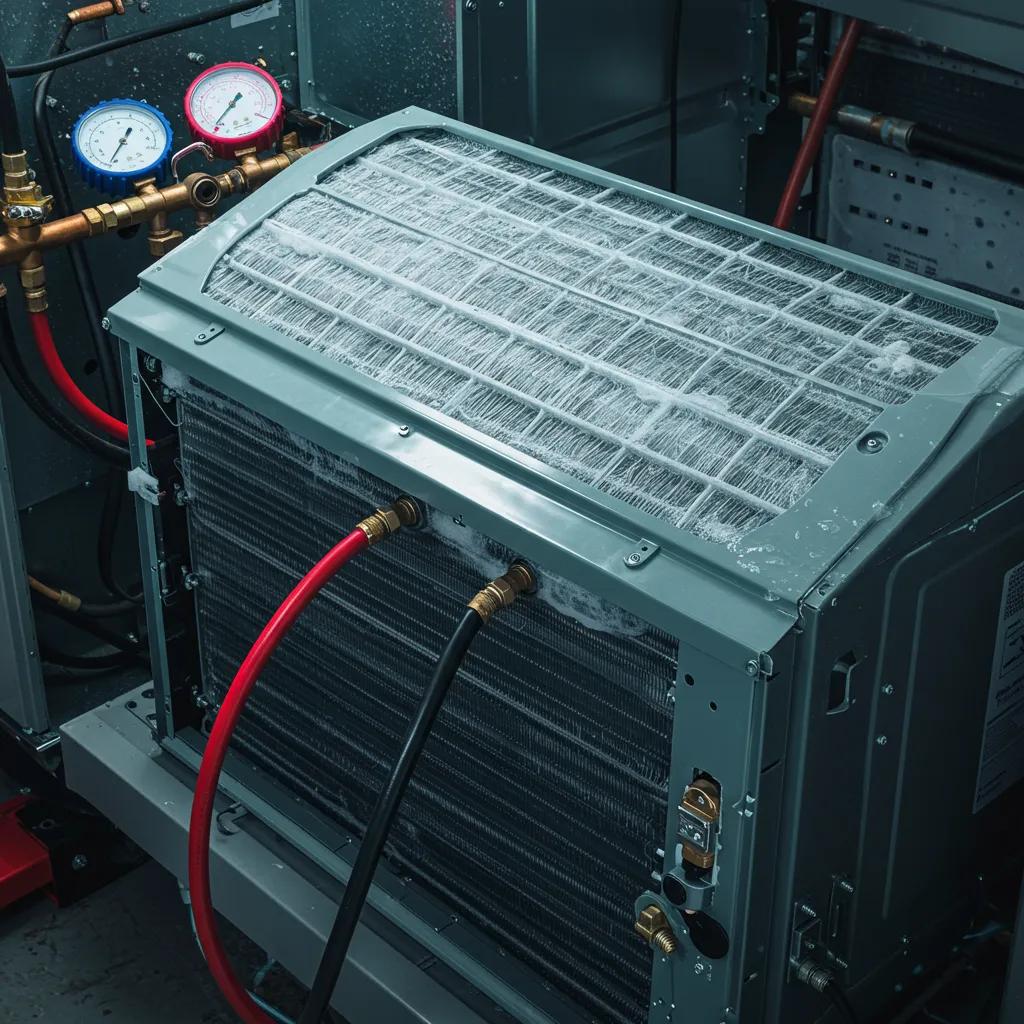
HVAC maintenance improves energy efficiency by addressing physical and control-related inefficiencies: cleaning coils reduces heat-transfer resistance, replacing filters restores designed airflow, and calibrating control systems prevents short-cycling and excessive run times. Our technicians measure refrigerant charge, motor amperage, and airflow to identify performance gaps and correct them, which reduces kW consumption and lowers utility bills. For example, a clogged coil or dirty filter can raise system energy use by up to 30–40% in extreme cases, and restoring proper operating conditions typically returns systems close to baseline efficiency. Scheduled tuning and component-level adjustments also eliminate unnecessary runtime and reduce peak electrical demand, which is especially valuable in NYC where demand charges and peak loads impact operating costs. Addressing these issues early prevents the cascade of failures that drive emergency repairs and higher long-term expenditures.
Research indicates that optimizing setpoints and schedules for rooftop units can lead to substantial energy and cost savings, with advanced control strategies further enhancing operational efficiency.
These efficiency improvements naturally lead to lifespan gains and fewer emergency incidents, which we explore next.
In What Ways Does Maintenance Extend Commercial HVAC Equipment Lifespan?
Regular maintenance extends equipment lifespan by preventing accelerated wear, maintaining lubricant and refrigerant integrity, and ensuring components operate within design tolerances to avoid thermal or mechanical stress. Tasks such as belt tensioning, bearing lubrication, motor and compressor checks, and corrosion inspections prevent small faults from magnifying into catastrophic failures that require expensive replacements. Extending service life by several years reduces total lifecycle costs and improves return on investment for major systems like chillers and rooftop units. Documented service histories also enable proactive replacement forecasting, helping you plan CAPEX rather than react with emergency expenditures. When maintenance includes component-level testing and recalibration, mean time between failures increases and overall reliability improves.
Preventative care is therefore both an operational necessity and a financial control that reduces unplanned capital outlays.
How Does HVAC Maintenance Ensure Compliance with NYC Regulations?
Maintenance supports NYC regulatory compliance by producing the performance documentation, efficiency tuning, and testing records local laws and audits require—most notably for emissions reductions and periodic energy audits. Concrete maintenance activities that map to compliance include scheduled efficiency tuning, refrigerant leak testing and repair, documented filter and ventilation upgrades, and energy metering or reporting that demonstrate reductions in carbon intensity. These deliverables align with the objectives of Local Law 97 (building emissions limits) and Local Law 87 (periodic energy audits and retro-commissioning), helping you show audited improvements or maintain baseline performance. Regular reports, calibration certificates, and inspection logs provide auditors and compliance teams with the evidence needed to demonstrate due diligence. Integrating maintenance with documented reporting reduces the risk of penalties and supports long-term regulatory planning.
Maintaining compliance also reduces business risk and supports sustainability goals that many NYC tenants now require.
Why Is Indoor Air Quality Important for Commercial Properties in NYC?

Indoor air quality (IAQ) matters because it directly affects occupant health, productivity, and legal risk for commercial operators; poor IAQ can increase sick days and reduce employee performance while creating reputational risk for tenant-facing businesses. Maintenance actions that improve IAQ include upgrading to higher-MERV filters where HVAC design permits, verifying outdoor air ventilation rates, cleaning coils and ducts to remove biological growth and particulates, and monitoring humidity to prevent mold and corrosion. Using these targeted interventions can reduce airborne contaminants and help you meet ASHRAE standards and client expectations for healthy indoor environments. Improving IAQ is especially important in high-traffic retail, hospitality, and medical environments where occupant density and sensitive operations require tighter environmental control.
For many commercial buildings, particularly those in the mid-tier segment, managing HVAC maintenance effectively is crucial, often relying on external providers due to a lack of dedicated in-house facilities staff.
Better IAQ also reduces equipment stress by preventing particulate buildup, which in turn supports longer equipment life and fewer service calls.
How Does Preventative Maintenance Minimize Emergency Repairs and Downtime?
Preventative maintenance minimizes emergency repairs by detecting and addressing wear indicators before they escalate—examples include identifying refrigerant leaks early, replacing near-failed bearings, and correcting control anomalies that would otherwise cause compressor lockouts. Emergency repairs are typically 3–5 times more expensive than planned maintenance because they involve expedited parts, after-hours labor, and operational losses; preventing those emergencies reduces both direct repair cost and indirect revenue impacts. A structured maintenance program with documented inspections and prioritized corrective actions reduces the probability of total system failures and shortens mean time to repair when incidents occur. Prioritizing preventative work helps you achieve more predictable operations, lower total cost of ownership, and fewer business disruptions from HVAC outages.
A preventive culture transforms reactive spending into predictable, budgeted maintenance that protects business continuity.
What Do Miller HVAC Tech’s Commercial HVAC Maintenance Plans Include?
Miller HVAC Tech’s commercial maintenance plans are structured to deliver comprehensive, trackable preventive care across rooftop units, chillers, split systems, refrigeration, furnaces, and heat pumps while offering customizable service levels and 24/7 emergency prioritization. Plans bundle routine inspections, component cleaning, diagnostic testing, system adjustments, and detailed reporting so you have documented proof of maintenance and performance improvements. Each plan level includes scheduled visits with defined tasks such as filter replacement frequency, coil cleaning cycles, refrigerant charge verification, control calibration, and performance reporting to support Local Law 97 and Local Law 87 requirements. Contracts also define emergency response SLAs and priority scheduling for contracted clients, and flexible payment options are available to accommodate budgeting preferences.
Below is a clear comparison of typical plan tiers showing inclusions, inspection schedules, and response expectations.
This EAV-style comparison clarifies how higher tiers expand inspection frequency, diagnostic depth, and emergency service prioritization to reduce downtime and support compliance.
Which Routine Inspections and Cleaning Services Are Provided?
Routine inspections and cleaning in commercial plans cover filters, coils, condensate drains, belts and pulleys, electrical connections, and control sensors, scheduled according to system type and occupancy patterns. Typical frequencies include monthly filter checks, quarterly coil and drain cleanings for high-load systems, seasonal compressor and motor inspections, and annual refrigerant leak testing and combustion analysis for heating systems. Our technicians follow a checklist to record condition, note corrective actions, and schedule repairs or replacements, ensuring transparency and traceability. Regular cleaning reduces heat-transfer resistance and prevents microbial growth in moist components, improving both efficiency and IAQ.
These routine activities feed into component testing and system adjustments to sustain performance over time.
How Are Component Testing and System Adjustments Performed?
Component testing combines electrical diagnostics, refrigerant pressure and charge verification, airflow measurement, and control system calibration using tools such as multimeters, manometers, and airflow meters to quantify system health. Our technicians document baseline readings and perform adjustments—tightening electrical connections, correcting refrigerant charge, balancing airflow, and reprogramming control set points—to restore designed performance. Results are compiled into service reports that include recommended next steps and parts needed, giving you a clear picture of system condition. This diagnostic-driven approach enables targeted repairs and measurable efficiency gains.
Consistent testing and adjustments reduce variability in system operation and support predictable energy performance.
What Customization Options Are Available for Different NYC Business Types?
Our maintenance plans are tailored to your business needs—restaurants receive integrated kitchen HVAC and exhaust checks with tighter refrigeration monitoring, hospitals and medical facilities get stricter IAQ controls and documentation, and retail/office properties receive occupant-focused ventilation tuning and energy-optimization services. Customization affects visit frequency, filter types (higher MERV selections where compatible), emergency response expectations, and reporting depth to match regulatory and operational requirements. Specialized add-ons like refrigeration-specific defrost management, sterile-environment controls, or remote monitoring can be included based on business workflows. Tailoring plans minimizes disruption to operations while addressing industry-specific risks.
Customized plans balance operational priorities and cost by defining service scope that directly supports each business type’s critical systems.
How Is 24/7 Emergency Support Integrated into Maintenance Contracts?
Emergency support in maintenance contracts is structured with clear SLAs, an escalation workflow, and priority scheduling so you receive rapid response and onsite stabilization during outages. Contracts typically specify response windows for different severity levels, phone and email contact pathways for after-hours reporting, and priority dispatch for technicians to minimize downtime. Preventative maintenance reduces incident frequency, and when emergencies occur, documented system histories accelerate diagnostics and repairs because technicians have prior data and baseline measurements. Contracted clients benefit from discounted parts pricing and prioritized scheduling compared with non-contracted calls.
This integrated approach ensures that proactive maintenance and reactive support work together to maintain continuous business operations.
How Often Should Commercial HVAC Systems Be Serviced in NYC?
Your commercial HVAC systems should be serviced on a schedule that reflects seasonal demands, system complexity, and occupancy: standard practice is biannual seasonal tune-ups (spring and fall) with more frequent checks for high-load or complex systems. Seasonal visits prepare systems for heavy cooling and heating periods by cleaning coils, verifying refrigerant charge, testing safety controls, and optimizing set points, which prevents stress during peak operation. Complex systems—such as chillers, VRF, and high-occupancy building HVAC—benefit from quarterly or monthly inspections to monitor performance metrics and detect early signs of degradation. Higher frequency servicing is cost-justified when equipment criticality, tenant safety, or temperature-sensitive operations make downtime unacceptable.
Following these schedules reduces emergency repairs and supports compliance while allowing predictable budgeting for maintenance.
What Is the Recommended Seasonal Maintenance Schedule?
A two-visit seasonal schedule includes a spring pre-cooling tune-up and a fall pre-heating tune-up, each addressing tasks relevant to upcoming peak loads and environmental conditions. Spring tune-ups focus on condenser and evaporator coil cleaning, refrigerant verification, belt and motor checks, and control calibration to ensure efficient cooling operations. Fall tune-ups emphasize combustion safety (where applicable), heat exchanger inspection, defrost cycle checks for heat pumps, and airflow balancing to prepare for heating seasons. Seasonal timing aligns maintenance with operational risk, ensuring systems enter peak months in optimal condition.
Seasonal maintenance reduces the likelihood of mid-season failures and supports steady energy performance across NYC’s variable climate.
When Are Quarterly Checks Necessary for Complex Systems?
Quarterly checks are necessary for systems with high runtime, critical temperature control needs, or complex components such as chillers, VRF arrays, and commercial refrigeration serving food-service operations. These checks capture trends in vibration, refrigerant levels, and motor current that monthly or seasonal visits might miss, enabling early intervention before faults escalate. For example, chillers in large office buildings or hospitals often have quarterly chemical treatments, performance testing, and control tuning to maintain efficiency and compliance. The marginal cost of increased frequency is typically offset by reduced emergency repair bills and improved uptime for mission-critical facilities.
Higher-frequency inspections are an investment in reliability and predictable operations for high-risk applications.
How Does Regular Servicing Prevent Costly Repairs?
Regular servicing prevents costly repairs by identifying wear and small faults—such as oil contamination, refrigerant loss, or sensor drift—before they trigger component failures that require expensive parts and after-hours labor. Emergency repairs often cost 3–5x more than planned maintenance because of expedited parts, overtime labor, and lost business during downtime; scheduled servicing converts that variable expense into predictable, budgeted costs. Documented maintenance history also streamlines troubleshooting and parts ordering, shortening repair time when breakdowns occur. Over time, regular servicing reduces the frequency and severity of failures, lowering total lifecycle costs.
Planning maintenance as a financial control transforms HVAC work from reactive crises into manageable operating expenditures.
What Types of Commercial HVAC Systems Does Miller HVAC Tech Service in NYC?
Miller HVAC Tech services a broad range of commercial systems common in NYC properties, including rooftop units (RTUs), chillers, split systems, VRF, walk-in freezers and commercial refrigeration, furnaces, and heat pumps—each with distinct maintenance needs and recommended frequencies. Service protocols include access and safety checks for rooftop units, chiller chemistry and condenser maintenance for chillers, coil and fan servicing for split systems, and rapid-response refrigeration support for temperature-critical walk-in systems. Our expertise across these system types enables us to create tailored maintenance plans that match equipment characteristics and business operational priorities. The EAV table below compares system types, common maintenance tasks, and recommended frequencies to help you choose appropriate service levels.
This equipment-focused EAV table clarifies how task frequency scales with system criticality and operational demands.
How Are Rooftop Units Maintained for Optimal Performance?
Rooftop units receive inspections for curb integrity, vibration and mounting, coil and condenser cleaning, condensate drain clearing, and airflow verification to maintain optimal heat exchange and prevent rooftop water intrusion. Access safety protocols and weather-related checks are also part of RTU maintenance to ensure personnel safety and unit longevity. Cleaning coils and verifying refrigerant charge restore cooling capacity and reduce compressor cycling, which directly improves efficiency. Regular RTU servicing also includes inspecting casings and fasteners to avoid air infiltration and moisture-related corrosion.
These RTU tasks are foundational to reducing downtime and sustaining rooftop unit efficiency across NYC seasons.
What Are the Maintenance Needs of Chillers and Split Systems?
Chillers require water-side treatment, condenser tube cleaning, refrigerant management, and load testing to ensure plant efficiency and prevent fouling that reduces heat transfer. Split systems need indoor coil cleaning, condensate drain maintenance, fan motor checks, and refrigerant charge verification to maintain comfort and efficiency in zoned spaces. Chiller maintenance often involves more chemical and system-level monitoring, while split-system care centers on component cleanliness and airflow. Both system types benefit from sensor calibration and predictive diagnostics to catch performance degradation early.
Differentiating chiller-level chemistry and plant monitoring from split-system component care ensures appropriate resource allocation and service frequency.
How Is Walk-In Freezer and Commercial Refrigeration Maintenance Handled?
Walk-in freezers and commercial refrigeration receive frequent monitoring for temperature stability, defrost cycle performance, gasket integrity, compressor health, and refrigerant leaks because failures cause immediate business loss for restaurants and markets. Monthly or more frequent inspections include logging temperatures, verifying alarm and control functions, checking evaporator coil cleanliness, and ensuring rapid response plans are in place for temperature excursions. Preventative steps—such as scheduled gasket replacement and proactive compressor servicing—reduce food loss risk and maintain regulatory food-safety standards. Emergency refrigeration protocols prioritize rapid onsite stabilization and component replacement to minimize spoilage.
For temperature-critical operations, frequent checks and expedited repair pathways are essential business protections.
What Expertise Does Miller HVAC Tech Have with Furnaces and Heat Pumps?
Furnace maintenance focuses on combustion safety, heat exchanger inspection, burner tuning, and ventilation checks to ensure safe and efficient heating in winter months, while heat pump service emphasizes defrost cycles, refrigerant balance, and seasonal reversing valve checks. Safety inspections include verifying flame sensors and proper venting for combustion systems and ensuring electrical integrity for heat pumps. Seasonal tuning ensures reliable operation during peak heating or cooling demands and prevents mid-season failures. Proper maintenance of these systems reduces safety risks, improves efficiency, and supports occupant comfort.
Combining safety checks with performance tuning ensures heating systems operate reliably throughout NYC’s colder months.
How Much Does Commercial HVAC Maintenance Cost in NYC?
Commercial HVAC maintenance costs in NYC vary widely based on system type, building size, access complexity, frequency of visits, and whether emergency response and reporting deliverables are included; typical per-visit ranges and per-square-foot guidance help you set expectations. As a rule of thumb, basic seasonal tune-ups for small systems may fall at the lower end of the market, while comprehensive contracts with predictive diagnostics, frequent inspections, and 24/7 emergency prioritization sit at the higher end. Key cost drivers include system complexity (chillers vs rooftop units), required certifications and reporting for compliance, rooftop access challenges, parts and refrigerant costs, and desired SLA levels. Preventative maintenance is generally more cost-effective than emergency repairs, which are commonly 3–5x more expensive when factoring in after-hours labor and expedited parts.
The EAV table below breaks down cost drivers and their typical influence on price to provide quick budgeting guidance.
This breakdown helps you see which factors drive estimates and where budget adjustments will have the most effect.
What Factors Influence Maintenance Pricing for NYC Businesses?
Pricing is influenced by system complexity, age and condition, building access, required diagnostics and reporting, frequency of visits, and whether refrigeration or temperature-critical services are included. Older systems often require more parts and labor, increasing costs, while rooftop access or constrained mechanical rooms may add rigging and safety time. Contractual SLAs, emergency prioritization, and compliance deliverables also raise the price because they require dedicated staffing and more detailed reporting. Understanding these drivers enables you to evaluate trade-offs between lower upfront costs and the long-term value of comprehensive coverage.
Transparent estimates that itemize these factors reduce procurement friction and support smarter budgeting decisions.
How Do Flexible Payment Plans Benefit Commercial Clients?
Flexible payment plans convert maintenance fees into predictable OPEX lines with options like monthly billing, retainer-based service, or per-visit invoicing, improving cashflow management and simplifying budget forecasting. For clients balancing CAPEX and OPEX, spreading maintenance and priority service costs over months preserves capital while ensuring required coverage. Predictable payments also simplify contract renewals and long-term lifecycle planning, enabling you to plan for replacements and upgrades. Payment flexibility is particularly useful for multi-site operators or seasonal businesses whose cashflow varies.
Choosing the right payment structure aligns financial planning with operational needs and reduces barriers to adopting comprehensive maintenance.
Why Is Preventative Maintenance More Cost-Effective Than Emergency Repairs?
Preventative maintenance is more cost-effective because it reduces the frequency and severity of failures that trigger expensive emergency interventions and lost business, and it enables planned parts procurement and scheduled labor at normal rates. Emergency repairs typically incur premium labor rates, expedited shipping for parts, and operational losses from downtime that often multiply direct repair costs by three to five times. Preventative programs also extend equipment life and improve energy efficiency, generating ongoing savings that offset maintenance fees. A sample comparison shows that modest annual maintenance spending can prevent one catastrophic failure whose replacement cost and operational impact exceed several years of planned service.
Investing in preventative maintenance shifts spending from unpredictable capital shock events to manageable operating costs with measurable operational and financial returns.
What Are the Benefits of Commercial HVAC Service Contracts in NYC?
Service contracts provide predictable scheduling, budgeting, and documented maintenance histories that simplify compliance, lifecycle planning, and procurement for NYC properties. Contracts deliver advantages such as priority emergency response, discounted parts and labor rates, scheduled reporting for audits, and lifecycle forecasting that helps you plan replacements and capital budgets. Long-term agreements create operational continuity, reduce administrative overhead, and consolidate vendor management. Contracts also support compliance by ensuring required inspections, testing, and documentation are performed and retained for audit purposes.
These contract-level benefits combine to reduce operational risk and make HVAC management a strategic facility function rather than a reactive chore.
How Do Service Contracts Provide Customized Maintenance Solutions?
Service contracts begin with a needs assessment that identifies system types, usage patterns, and regulatory obligations, enabling us to create customized checklists and service levels that reflect your business priorities. Tailoring may include refrigeration-focused maintenance for restaurants, sterile-environment protocols for medical facilities, or enhanced IAQ measures for tenant-facing retail and office spaces. Customization adjusts visit frequency, filter types, reporting cadence, and emergency prioritization to match operational constraints. This assessment-driven approach ensures the contract scope aligns with real-world needs and budget conditions.
Customization ensures resources are focused where they deliver the greatest reduction in operational risk and cost.
What Are the Advantages of Long-Term HVAC Service Agreements?
Long-term agreements deliver financial predictability, priority scheduling, discounted repair rates, and continuous lifecycle management that help you forecast capital replacement needs. Multi-year contracts allow vendors to build performance baselines, perform trend analysis, and implement longer-term efficiency measures that reduce operating costs. They also centralize documentation, producing a continuous record useful for audits and resale valuation. Over time, long-term partners can reduce total cost of ownership through targeted retrofits and optimized maintenance strategies.
The stability of long-term agreements supports strategic asset management and smoother financial planning.
How Do Contracts Support Compliance with NYC Building Codes?
Contracts support compliance by delivering scheduled testing, inspection reports, and efficiency tuning certificates that align with Local Law 97 and Local Law 87 requirements; these deliverables form the evidence trail auditors expect. Contractual reporting includes calibration records, refrigerant leak logs, and energy performance summaries that make audits less disruptive and reduce compliance risk. Providers can also schedule retro-commissioning and energy audits as part of contract services to proactively address emissions targets. Formalized documentation and repeatable processes make compliance an integrated part of operations rather than an afterthought.
This contract-based documentation is a practical tool for you managing multiple regulatory obligations.
Frequently Asked Questions
Conclusion
Investing in commercial HVAC maintenance services in NYC not only enhances energy efficiency but also extends the lifespan of critical equipment, ensuring compliance with local regulations. By prioritizing regular inspections and preventative care, you can significantly reduce operational costs and improve indoor air quality for occupants. Tailored maintenance plans from Miller HVAC Tech provide the necessary support to meet unique business needs while safeguarding against unexpected downtime. Contact us today to explore customized solutions that will keep your HVAC systems running smoothly and efficiently.